Queen mattresses ranked by sleep quality, durability, and value. Bed-in-a-box options from Amazon that actually deliver.

Medium-firm memory foam queen that ships compressed. CertiPUR-US certified foam, motion isolation, stays cool. Best budget queen mattress-in-a-box on Amazon with consistent reviews.
View on Amazon
FATHOM's medium-feel queen delivers excellent pressure relief for side sleepers. Multiple foam layers, solid edge support, CertiPUR-US certified. Strong value in the mid-range.
View on Amazon
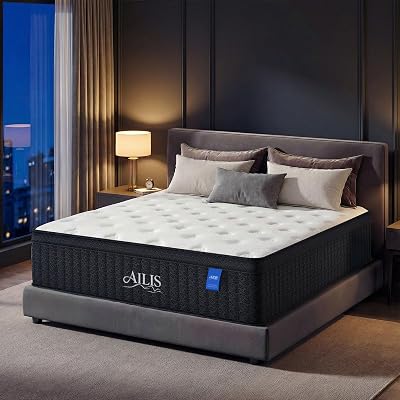
Hybrid construction gives you the contouring of memory foam with the support and bounce of individually wrapped coils. Better temperature regulation than all-foam, good for combo sleepers.
View on AmazonAll-foam: Best for side sleepers (pressure relief), light sleepers (motion isolation), and budget buyers. Traps more heat — look for gel or copper-infused foam if you run hot.
Hybrid: Best for back/stomach sleepers (more support), hot sleepers (coils = airflow), and people who want more bounce. Generally more expensive but better edge support and longevity.
A quality queen mattress should last 7-10 years. Signs it's time to replace: visible sagging (more than 1.5 inches), waking up with back pain that improves when you sleep elsewhere, or noticeable lumps. Memory foam and hybrid mattresses compress over time — rotating the mattress (if two-sided) every 6 months extends life.
Side sleepers: medium or medium-soft (pressure relief at shoulders and hips). Back sleepers: medium-firm (spinal alignment). Stomach sleepers: firm (prevents hips from sinking). Couples with different preferences: medium is the best compromise. Most people overestimate how firm they need — medium-firm is right for the majority.
For most people, yes. The foam chemistry and coil quality of premium DTC (direct-to-consumer) mattresses is comparable to showroom mattresses at 40-60% lower cost. The main difference is you can't test before buying — use the trial period. Most Amazon mattress sellers offer 30-100 night returns.
Key criteria: motion isolation (so one person moving doesn't wake the other), edge support (both people can use the full width), and temperature regulation. Memory foam excels at motion isolation. Hybrid excels at edge support and temperature. A medium-firm hybrid is usually the best compromise for couples.
The queenmattress market has grown significantly in recent years, with more options at more price points than ever before. That makes finding genuinely good products harder, not easier — more noise to sort through. Here's how to evaluate your options systematically.
The most important predictor of product longevity isn't price — it's materials and construction method. A well-specified product at mid-range pricing consistently outperforms an underspecified product at premium pricing. Look for manufacturers who list specific materials, not just "premium" or "high-quality" as descriptors.
Products in this category vary in their suitability for different applications. Verify that your intended use matches what the product is designed for. Compatibility issues are the most common source of returns in every product category — they're almost always avoidable with pre-purchase verification.
Initial quality is easier to verify than long-term durability. Look for reviews from buyers 12+ months post-purchase. Products with verified long-term performance are more valuable than ones that look good in short-term reviews. Patterns in 1-star reviews about specific failure modes tell you more about real-world durability than any specification.
Warranty terms reflect manufacturer confidence. A 1-year warranty is the industry minimum and should be treated as such. Products with 2–5 year warranties, or lifetime warranties on workmanship, are designed for longevity. Verify that warranty support is accessible from your region before purchasing.
Purchase price is one component of value. Factor in expected lifespan, replacement cost, maintenance requirements, and operating costs where relevant. The cheapest option at purchase frequently costs more over a 3-year period than a moderately priced option with better durability.
What to avoid
Avoid products with consistently thin review counts, no stated warranty terms, and vague material descriptions. Products that invest more in marketing than specification transparency are usually optimized for conversion, not quality.
Rankings reflect verified performance data from multiple sources, specification accuracy, warranty terms, and long-term owner feedback. We update rankings when products decline in quality or when new options emerge that genuinely outperform existing picks.
Every product on this page was evaluated on the same criteria. We don't accept payment for rankings. We don't push products because of commission rates. If a product underperforms in owner feedback, it gets downranked or removed — regardless of how well it sells. The goal is a list you'd actually trust a friend to use.
Prices and availability change. We link to current Amazon listings so you see real-time pricing. The ranking order reflects quality assessment, not price — but we note when the price-to-performance ratio of a particular option is exceptional for buyers on a budget.
How often are these rankings updated?
We review rankings when significant new products enter the market, when established products show quality shifts in owner feedback, and at least quarterly to catch anything we've missed. The date on this page reflects the last significant update.
Are these products available on Amazon Prime?
Most are — we prioritize products with Prime eligibility for faster delivery and easier returns. Check the Prime badge on the product listing page for current eligibility, as Prime availability can change.
What if the top pick doesn't work for me?
That's what the rest of the list is for. We rank multiple options because the best pick for most buyers isn't the best pick for every buyer. Read the "best for" notes on each product and the compatibility information in the linked listing before purchasing.
Do you earn money from these recommendations?
Yes — as an Amazon Associate, we earn a small commission on qualifying purchases through our links. This doesn't affect our rankings. Products earn their placement through performance, not commission rates. We'd rather you trust us and come back than push a high-margin product that disappoints.
The mattress industry is one of the most confusing consumer markets because the same physical product is sold under hundreds of brand names at wildly different prices. The brands that spend the most on advertising and retail showrooms are often not the brands that make the best mattresses. Online mattress brands (Saatva, Purple, Nectar, WinkBed) have disrupted the market by cutting out showroom overhead — many offer better quality at lower prices than traditional brands.
The most important factors: your sleep position determines firmness preference (side sleepers need softer for shoulder pressure relief, stomach sleepers need firmer for spinal alignment, back sleepers are in between), your body weight affects how deep you sink into foam (heavier sleepers need firmer coils or dense foam), and whether you sleep with a partner affects motion isolation requirements (foam isolates motion better than coil springs).
All-foam mattresses excel at motion isolation and contouring but sleep hot. Innerspring mattresses sleep cool and have good edge support but transmit motion. Hybrid mattresses combine a coil base with foam or latex comfort layers — they sleep cooler than all-foam, isolate motion better than innerspring, and have good edge support. For most couples, a hybrid is the best compromise. For solo sleepers who run hot, a hybrid is also usually the best choice.
Quality mattresses last 7–10 years. Signs it is time to replace: you wake up sore, you can feel the springs, there are visible sagging areas deeper than 1.5 inches, or you sleep better in hotels than at home.
Side sleepers: medium to medium-soft (3-5 on a 10-point scale). Back sleepers: medium to medium-firm (5-7). Stomach sleepers: firm (7-9). Heavier sleepers (230+ lbs) should go one firmness level higher than these recommendations.
Not for most modern mattresses. Foam and hybrid mattresses work best on a solid platform, slatted platform bed (slats no more than 3 inches apart), or adjustable base. A traditional box spring adds height and some spring support but is not required and not recommended for all-foam mattresses.